


 Talkfever App
 Global Talk
 Upcoming
 child-safety
 Vdo Junction
How to choose quartzite and granite aggregates?
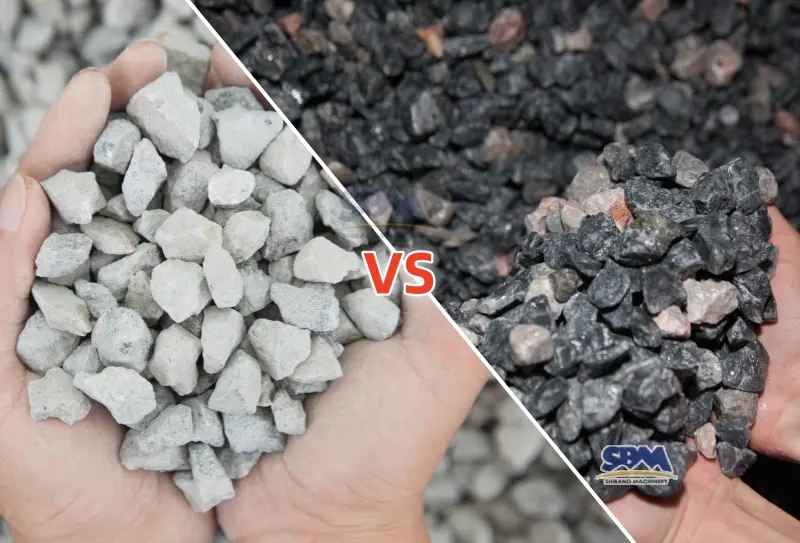
Choosing between quartzite vs granite aggregates depends heavily on your specific project requirements, priorities, and local availability. Here's a breakdown of key factors to consider:
-
Geology & Composition:
-
Granite: An igneous rock formed from cooled magma. Composed primarily of quartz, feldspar, mica (biotite or muscovite), and sometimes amphiboles. Color varies widely (pink, gray, white, black) depending on mineral content.
-
Quartzite: A metamorphic rock formed when sandstone is subjected to intense heat and pressure. Composed almost entirely of quartz grains (typically >90%) fused together. Color is usually white, gray, or shades of tan/pink depending on impurities.
-
-
Key Properties Comparison:
Property Quartzite Aggregates Granite Aggregates Winner for... Hardness Extremely Hard (Mohs 7+) - Higher quartz content Very Hard (Mohs 6-7) Abrasion Resistance Abrasion Resistance Superior - Quartz is highly resistant to wear Very Good, but softer minerals wear faster High-traffic surfaces, asphalt top course Strength (Crushing) Very High Very High to High Structural concrete, base layers Toughness/Impact Res. Hard but can be brittle - Prone to cleavage/splitting Generally Tougher - Interlocking mineral structure Impact resistance, areas prone to heavy loading Durability (Weathering) Excellent - Chemically inert, low porosity Good, but feldspars susceptible to chemical weathering Freeze-thaw cycles, chemical exposure Angularity Typically Highly Angular - Fractures conchoidally Angular to Sub-Rounded Better interlock (base, asphalt) Surface Texture Often Rough & Gritty Can be smoother depending on minerals Skid resistance, bond with cement Aesthetics Consistent white/light gray, sometimes subtle hues Wide range of colors/patterns Decorative applications Cost & Availability Often Higher Cost - Less common sources Typically Lower Cost & Wider Availability Budget-sensitive projects -
Choosing Based on Application:
-
Asphalt Pavement (Especially Surface Course):
-
Quartzite: Often the preferred choice due to its superior abrasion resistance and rough texture, providing excellent skid resistance and long-lasting wear against tires. High angularity improves stability.
-
Granite: A very good and common choice, especially for base/binder courses or where cost/availability favors it. Ensure it has sufficient hardness/abrasion resistance for the specific traffic load. Polishing resistance might be lower than quartzite.
-
-
Concrete Aggregates:
-
Structural Concrete: Both are excellent. Granite is widely used and cost-effective. Quartzite provides exceptional durability and strength, potentially beneficial in high-wear areas (floors, pavements) or harsh environments.
-
Decorative Concrete/Exposed Aggregate: Granite usually wins due to its wider color and textural variety. Quartzite offers a clean, consistent, light-colored look if that's the desired aesthetic.
-
-
Road Base & Subbase:
-
Both are excellent choices due to high strength and angularity. Availability and cost often become the deciding factors here. Granite is frequently used. Quartzite works perfectly well if readily available.
-
-
Railroad Ballast:
-
Both are suitable. Angularity and toughness are critical. Granite's inherent toughness can be advantageous against impact loading from trains. Quartzite's angularity and hardness also perform well. Specific specifications and local sources dictate choice.
-
-
Drainage Layers (French Drains, etc.):
-
Both work well due to angularity creating void space. Cost and availability are key. Granite is common.
-
-
Landscaping & Decorative Stone:
-
Aesthetics dominate. Granite offers vastly more color and pattern options (crushed, pebbles, boulders). Quartzite provides a clean, bright white or light gray look.
-
-
Filter Media:
-
Both can be used effectively. Consistent grading and chemical inertness are key. Quartzite's purity can be advantageous in sensitive applications.
-
-
-
Practical Considerations:
-
Local Availability: This is often the MOST critical factor. Transport costs significantly impact the overall price. Use the best quality locally available aggregate that meets your technical requirements.
-
Cost: Granite is generally more abundant and thus often less expensive than quartzite. Get quotes for both from local suppliers.
-
Supplier & Quality Control: Source from reputable quarries/suppliers. Request test results for the specific stockpile you are buying:
-
LA Abrasion Loss: Measures resistance to wear/abrasion (Lower % = Better). Quartzite typically excels.
-
Aggregate Crushing Value (ACV) / Ten Percent Fines Value (TFV): Measures resistance to crushing (Lower ACV/Higher TFV = Better). Both are usually good.
-
Specific Gravity & Absorption: Affects mix design (concrete/asphalt). Quartzite often has very low absorption.
-
Soundness (Freeze-Thaw): Measures resistance to weathering (Sodium/Magnesium Sulfate test). Both are typically good, quartzite often excellent.
-
Particle Shape & Gradation: Crucial for performance and workability.
-
-
Project Specifications: Always adhere to the specifications outlined in the project contract or relevant standards (ASTM, AASHTO, local DOT specs). These will dictate required test values.
-
Summary & Recommendation:
-
Prioritize Abrasion Resistance/Wear Surface (Asphalt Top, Concrete Floors)? Lean towards Quartzite.
-
Prioritize Impact Resistance/Toughness (Ballast, Heavy Loading)? Lean towards Granite (generally tougher).
-
Need Wide Color Variety/Decorative Appeal? Choose Granite.
-
Working in a Harsh Chemical/Freeze-Thaw Environment? Both are good, Quartzite has a slight edge due to purity and low porosity.
-
Cost-Sensitive or Need Large Volumes? Granite is usually more economical and widely available.
-
Check Local Availability & Get Test Data: This is crucial. Test the specific aggregate from your intended supplier against your project specs.
In essence: For ultimate durability against wear and weathering, choose Quartzite. For toughness, cost-effectiveness, wide availability, and aesthetics, choose Granite. Always base your final decision on local source quality, test data, project specifications, and budget.
More Information on my website. You can search on search engines: SBM Mill & Crusher
 Dutch
Dutch
 English
 Arabic
 French
 Spanish
 Portuguese
 Deutsch
 Turkish
 Italiano
 Russian
 Romaian
 Portuguese (Brazil)
 Greek
Greek
